Conductors, Insulators, and Dielectrics

Conductors, Insulators, and Dielectrics | Physics for IIT JEE Conductors, Insulators, and Dielectrics Comprehensive Guide for IIT JEE, NDA and Other Competitive Exams Table of Contents 1. Introduction 2. Conductors 2.1 Properties of Conductors 2.2 Free Charges vs. Bound Charges 2.3 Electrostatic Shielding 3. Insulators 3.1 Properties of Insulators 4. Dielectrics 4.1 Electric Polarization 4.2 … Read more
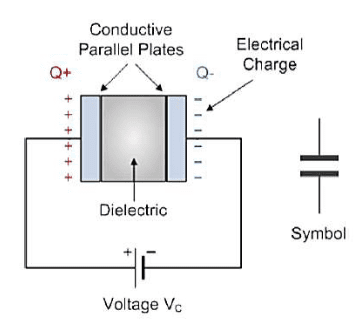
Capacitors and Their Combinations class 12 physics

str of capictor

Capacitors and Their Combinations | Physics for IIT JEE & Competitive Exams Capacitors and Their Combinations A Comprehensive Guide for IIT JEE, NDA & Other Competitive Exams Electrostatics Capacitors IIT JEE Competitive Exams 1. Introduction to Capacitors Capacitors are fundamental passive electronic components used in a wide range of electrical and electronic circuits. They store … Read more

Electric Charges and Fields class 12

Electric Charges and Fields – Physics for Competitive Exams Electric Charges and Fields Unit I: Electrostatics (09 marks) – Physics for IIT JEE, NDA, and Other Competitive Exams Introduction to Electric Charges Electric charge is a fundamental property of matter responsible for electric phenomena. It is the physical property of matter that causes it to … Read more

Electrostatic Potential and Capacitance class 12

Electrostatic Potential and Capacitance | Physics for IIT JEE, NDA Electrostatic Potential and Capacitance Comprehensive guide for IIT JEE, NDA and other competitive exams 1. Electric Potential Electric potential is a scalar quantity that represents the amount of work done per unit charge to move a test charge from a reference point to a specific … Read more

Electrostatics Practice Problems

Comprehensive Electrostatics Practice Problems for Competitive Exams Comprehensive Electrostatics Practice Problems For IIT JEE, NDA, and Other Competitive Exams This collection contains carefully selected problems covering all aspects of electrostatics, designed to help you master concepts and problem-solving techniques required for competitive examinations. Table of Contents Tips for Solving Electrostatics Problems Easy Level Problems Medium … Read more

Physical Properties of Metals and Non-metals class 10

Physical Properties of Metals and Non-metals | Chemistry Blog Physical Properties of Metals and Non-metals A comprehensive guide for students preparing for exams Introduction Elements are broadly classified into metals and non-metals based on their physical and chemical properties. Understanding these properties is fundamental to chemistry and helps explain how different elements behave in various … Read more

Chemical Properties of Metals class 10

Chemical Properties of Metals | Chemistry Blog Chemical Properties of Metals Understanding how metals react in different chemical environments Introduction The chemical properties of metals are primarily determined by their tendency to lose electrons and form positive ions (cations). Unlike their physical properties which describe appearance and behavior, chemical properties describe how metals interact with … Read more

Action of Water on Metals class 10

Action of Water on Metals Action of Water on Metals Water is one of the most common substances on Earth, and understanding how it interacts with metals is crucial for both theoretical chemistry knowledge and practical applications. In this blog post, we’ll explore how different metals react with water, the patterns of reactivity, and the … Read more

Action of Air on Metals class 10

Action of Air on Metals | Chemistry Blog Action of Air on Metals Understanding how different metals react with components of air Introduction Air is a mixture of gases, primarily nitrogen (78%), oxygen (21%), carbon dioxide (0.04%), and trace amounts of other gases including water vapor. When metals are exposed to air, they may undergo … Read more

Action of Acids on Metals class 10

Action of Acids on Metals Action of Acids on Metals Understanding how metals react with acids – A comprehensive guide for students Introduction The reaction between metals and acids is an essential topic in chemistry that frequently appears in exams. When metals react with acids, they generally produce a salt and hydrogen gas. However, not … Read more