Most Important Questions of Our Environment

Our Environment Activities Based Questions NCERT Solutions We often hear the term ‘environment’ in various contexts, from television and newspapers to conversations with people around us. Our elders reminisce about a time when the environment was different, while others emphasize the need to work in a healthy environment. Global summits regularly address environmental issues, highlighting … Read more

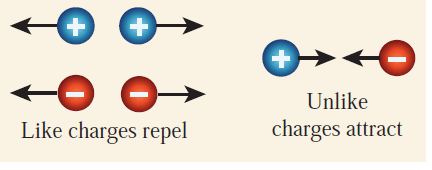
What is Electric Charge? And its importance

electric forces

Nature and Structure Electric charge, like mass and length, is a fundamental property of matter. Atoms, the building blocks of matter, are composed of electrons, protons, and neutrons. Electrons carry a negative charge, protons carry a positive charge, and neutrons are neutral. Atomic Structure In a neutral atom, the number of electrons equals the number … Read more

Tropic Movements with their important types in plants

Tropic Movements: Movements Due to Growth in Plants Movements due to growth( Tropic Movements) in plants are directional responses to environmental stimuli, typically resulting in the bending or curving of plant parts. These movements are usually slower than immediate responses and involve differential growth rates in different parts of the plant. These growth movements, known … Read more

Most Important Immediate Response to Stimulus in Plants

Immediate Response to Stimulus in Plants In plants, immediate Response to Stimulus is typically characterized by rapid movements and changes that occur within seconds or minutes of exposure to a stimulus. These rapid responses are often referred to as nastic movements, and they differ from tropic movements, which are slower and more directional. Types of … Read more

Nervous System and its important parts with functions

Nervous System

### Excerpt on the Nervous System in Animals

The nervous system is a highly specialized network in animals that orchestrates a wide array of bodily functions, from simple reflexes to complex behaviors. It is fundamentally divided into two main components: the Central Nervous System (CNS) and the Peripheral Nervous System (PNS).

The CNS, comprising the brain and spinal cord, serves as the primary control center. The brain itself is a marvel of biological engineering, featuring regions such as the cerebrum, cerebellum, and brainstem. The cerebrum, the largest part, is divided into four lobes—frontal, parietal, temporal, and occipital—each responsible for different aspects of perception, reasoning, and voluntary movement. The cerebellum ensures coordination and balance, while the brainstem manages essential life functions like breathing and heart rate.

The spinal cord acts as a conduit for signals between the brain and the rest of the body, also handling reflex actions independently of the brain. Protected by the vertebral column, it is a critical component of the CNS.

Extending from the CNS, the PNS connects the brain and spinal cord to the limbs and organs. It is subdivided into the somatic nervous system, which governs voluntary movements and sensory information, and the autonomic nervous system, which regulates involuntary functions such as heartbeat and digestion. The autonomic system is further split into the sympathetic and parasympathetic systems, which prepare the body for stress and relaxation, respectively.

Neurons, the fundamental units of the nervous system, transmit electrical signals rapidly across synapses with the help of neurotransmitters. These signals are facilitated by the myelin sheath, a fatty layer that insulates axons and speeds up communication. Supporting cells, known as glial cells, provide structural and nutritional support to neurons.

Ganglia, clusters of neuron cell bodies, and various types of receptors play vital roles in processing and responding to sensory inputs. Together, these components enable animals to react to their environment, maintain internal stability, and perform intricate behaviors essential for survival.

What are the Uses of Spherical Mirrors?

Topic: Use of Spherical Mirrors Definition The Uses of Spherical Mirrors refers to the various practical applications of concave and convex mirrors based on their properties of reflection and image formation. Explanation Spherical mirrors, which include concave and convex mirrors, are used in a variety of applications due to their unique ability to reflect light … Read more