

1. General Characteristics
The s-block elements are those in which the last electron enters the outermost s-orbital. They are situated on the extreme left of the periodic table.
- Group 1 (Alkali Metals): [Noble Gas] ns1
- Group 2 (Alkaline Earth Metals): [Noble Gas] ns2
2. Alkali Metals (Group 1)
Elements: Li, Na, K, Rb, Cs, Fr. Called "Alkali" because they form strong hydroxides with water.
Physical Properties
- Atomic Size: Largest in their respective periods. Increases down the group.
- Hydration Enthalpy: Decreases down the group.
Li+ > Na+ > K+ > Rb+ > Cs+
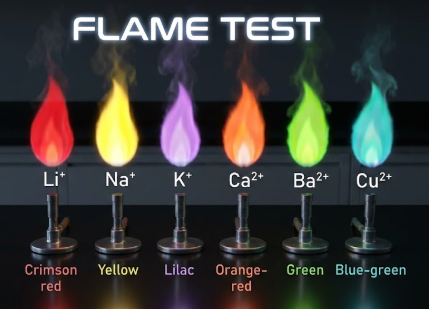
(Li+ has max degree of hydration, hence Li salts are hydrated e.g., LiCl·2H2O). - Flame Color: Valence electrons get excited and emit color.
Li (Crimson), Na (Yellow), K (Violet), Rb (Red violet), Cs (Blue).
Chemical Properties
They burn vigorously to form oxides.
• Lithium forms Monoxide (Li2O).
• Sodium forms Peroxide (Na2O2).
• K, Rb, Cs form Superoxides (MO2).
Dissolve to give deep blue solution (conducting).
M + (x+y)NH3 → [M(NH3)x]+ + [e(NH3)y]-
Blue color is due to Ammoniated Electron. Paramagnetic.
Important Compounds
- Sodium Carbonate (Washing Soda): Na2CO3·10H2O. Prepared by Solvay Process.
- Sodium Hydroxide (Caustic Soda): NaOH. Prepared by electrolysis of brine (Castner-Kellner cell).
- Sodium Bicarbonate (Baking Soda): NaHCO3. Decomposes on heating to give CO2 (makes cakes fluffy).
3. Alkaline Earth Metals (Group 2)
Elements: Be, Mg, Ca, Sr, Ba, Ra. Their oxides/hydroxides are alkaline and found in earth's crust.
Physical Properties
- Ionization Enthalpy: Higher than Group 1 (due to smaller size). Decreases down the group.
- Flame Color:
Ca (Brick Red), Sr (Crimson), Ba (Apple Green).
Be and Mg do NOT impart color (electrons held too tightly).
Solubility Trends
| Compound | Trend Down the Group | Reason |
|---|---|---|
| Hydroxides | Solubility Increases | Lattice Enthalpy decreases more than Hydration Enthalpy. |
| Sulphates | Solubility Decreases | Hydration Enthalpy decreases rapidly. |
Important Compounds of Calcium
- Quick Lime (CaO): From heating limestone. Basic oxide.
- Slaked Lime (Ca(OH)2): CaO + H2O. Used in whitewashing. Aq. solution is Lime Water.
- Plaster of Paris (POP): CaSO4·½H2O. Obtained by heating Gypsum (CaSO4·2H2O) at 373 K.
4. Anomalous & Diagonal Relationships
Due to exceptionally small size and high polarizing power.
• Li is harder than other alkali metals.
• Li forms nitride (Li3N) directly with N2.
• LiNO3 decomposes to oxide (Li2O), others give nitrite (MNO2).
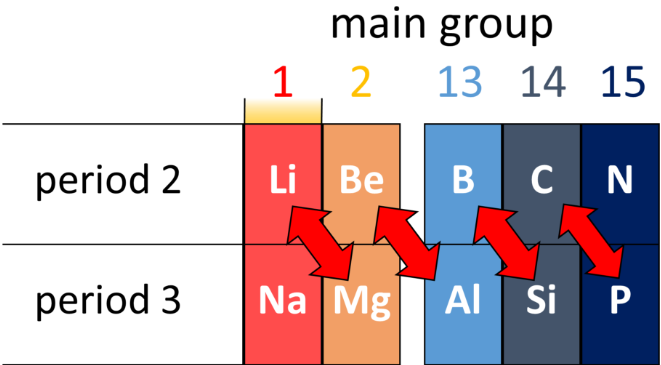
Li and Mg show similar properties due to similar charge/size ratio.
• Both form nitrides.
• Carbonates decompose on heating.
• Chlorides (LiCl, MgCl2) are deliquescent and soluble in ethanol.
Structure of BeCl2
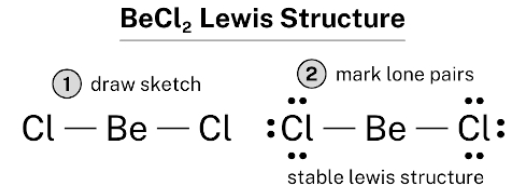
Solid State: Polymeric chain structure with chloro-bridges.
Vapor Phase: Dimer (Be2Cl4) below 1200 K, Linear monomer (BeCl2) above 1200 K.
5. Biological Importance
Na+: Major cation in Extracellular fluid. Regulates blood pressure, nerve signals.
K+: Major cation in Intracellular fluid. Activates enzymes, nerve signals.
Na-K Pump: Consumes 1/3rd of ATP in resting animal.
Mg2+: Cofactor for enzymes (ATP). Central atom in Chlorophyll (photosynthesis).
Ca2+: 99% in bones/teeth (Apatite). Required for muscle contraction and blood clotting.
Numericals & HOTS
Important Trends & Formulae
20 Golden Facts (NEET)
- 1. Density Anomaly: Generally, density increases down the group. However, Potassium (K) is lighter than Sodium (Na) due to an unusual increase in atomic size of K.
- 2. Lithium's Nitride: Lithium is the only alkali metal that reacts directly with Nitrogen gas to form a Nitride (Li3N). This is due to its small size and high lattice energy.
- 3. Superoxides: Potassium (K), Rubidium (Rb), and Cesium (Cs) form superoxides (MO2). KO2 is used in submarines and space shuttles to absorb CO2 and release O2.
- 4. Solution in Ammonia: All alkali metals dissolve in liquid ammonia giving a Deep Blue solution which is conducting and paramagnetic (due to ammoniated electrons). On standing, it liberates H2 and becomes amide (Blue → Bronze).
- 5. Photoelectric Effect: Cesium (Cs) and Potassium (K) have very low ionization enthalpies, making them useful as electrodes in photoelectric cells.
- 6. Solvay Process Limit: Solvay process is used to manufacture Na2CO3. It cannot represent manufacture of K2CO3 because KHCO3 is too soluble to be precipitated.
-
7. Flame Colors:
Li: Crimson Red | Na: Golden Yellow
K: Lilac (Violet) | Rb: Red Violet | Cs: Blue
Ca: Brick Red | Sr: Crimson | Ba: Apple Green - 8. No Flame Color: Beryllium (Be) and Magnesium (Mg) atoms are small and their valence electrons are strongly bound. The energy of the flame is insufficient to excite them; hence, they show no flame color.
- 9. Sorel's Cement: A mixture of MgO and MgCl2 solution forms a hard setting cement known as Sorel's cement (Magnesium oxychloride).
- 10. Amphoteric Be: Beryllium hydroxide [Be(OH)2] and Oxide (BeO) are Amphoteric in nature (react with both acid and alkali). Other Group 2 oxides are basic.
- 11. Dead Burnt Plaster: If Gypsum is heated above 393 K, all water of crystallization is lost, forming anhydrous CaSO4, known as "dead burnt plaster" (it does not set with water).
- 12. Castner-Kellner Cell: Used for NaOH production. Mercury cathode is used, forming Na-Hg amalgam, which prevents the reaction of Na with water in the cell.
- 13. Solubility of Li Salts: LiF is least soluble (high lattice energy). LiI is soluble in ethanol/acetone (high covalent character due to polarization).
- 14. BeCl2 Structure: In solid state, it has a polymeric chain structure with chloro-bridges. In vapor phase, it exists as a dimer (Be2Cl4) or monomer (linear BeCl2 at high temp).
- 15. Reducing Power: In aqueous solution, Lithium is the strongest reducing agent (most negative E° = -3.04 V) due to its high hydration energy.
- 16. Biological Role: A typical 70 kg man contains ~170 g Ca (bones) but only ~5 g Fe. Mg is present in Chlorophyll (light absorption).
- 17. Suspension of Lime: An aqueous suspension of slaked lime is called Milk of Lime. The clear solution is called Lime Water.
- 18. Barium Meal: BaSO4 is insoluble and opaque to X-rays. It is used as a "Barium meal" for X-ray imaging of the digestive tract.
- 19. Thermal Stability Order: BeCO3 < MgCO3 < CaCO3 < SrCO3 < BaCO3. BeCO3 is unstable and kept in an atmosphere of CO2.
- 20. Diagonal Relationship: Lithium shows diagonal relationship with Magnesium. Beryllium shows diagonal relationship with Aluminium. (Similar charge/size ratio).